Speaker: Julia Nagel @sinfonialeipzig
Pitching is a key skill for any entrepreneur, creative, or professional — whether you’re introducing yourself at a networking event, sharing your idea with a potential partner, or presenting on stage in a pitch competition. This workshop gave us space to practice real pitching scenarios and build confidence through reflection, structure, and action.
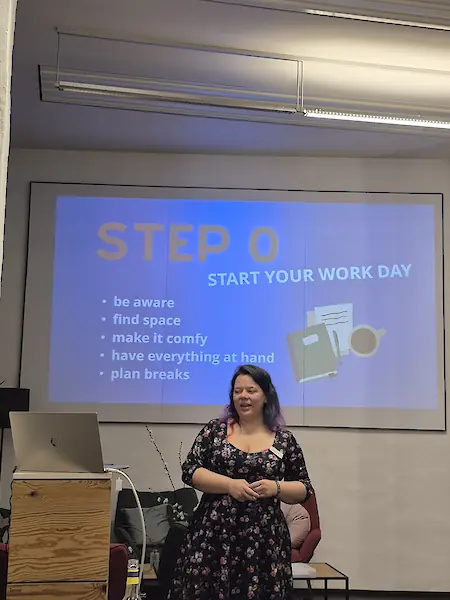
Step 0: Prepare Before You Start
Before diving into work, set yourself up for success:
- Plan breaks in advance.
- Have all necessary materials ready.
- Make your workspace comfortable (e.g., grab your favorite tea, play music).
1. Find Your Why
Understand your motivation and purpose. Why are certain tasks important to you? Identifying your purpose will help you stay focused and motivated.
2. Find Your What
Categorize your to-dos based on their nature. For example: work-related, hobbies, passions, etc.
3. Organize by Lists
Start listing your tasks and sort them into your categories:
Writing things down already brings you halfway toward completing them.
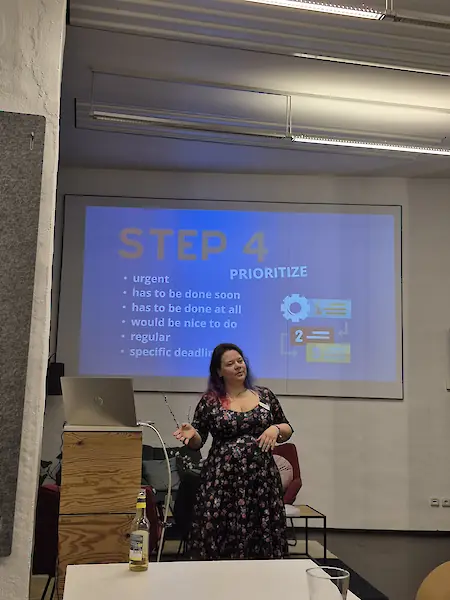
4. Prioritize Effectively
Break down tasks by urgency:
-
Urgent
-
Needs to be done soon
-
Must be done
-
Would be nice to do
-
Regular
-
Specific deadlines
If you notice that your would-be-nice list is getting too long, make it a priority to review and act on it—add “Check my would-be-nice list” to your urgent tasks.
5. Find Your Workflow
Identify whether you work best with:
-
Time-based: Tasks assigned specific time blocks.
-
List-based: Tasks tackled based on priority, without strict time constraints.
-
Hybrid: A mix of both.
To determine which approach suits each task, ask yourself: Do I need a set amount of time to complete this? or is it better to leave open-ended space for it?
Adjust your workflow accordingly to maximize productivity.
6. Finish Your Workday Right
-
Review what you’ve accomplished.
-
Clean up your workspace.
-
Plan for the next day.
-
Reflect on your progress and celebrate small wins.