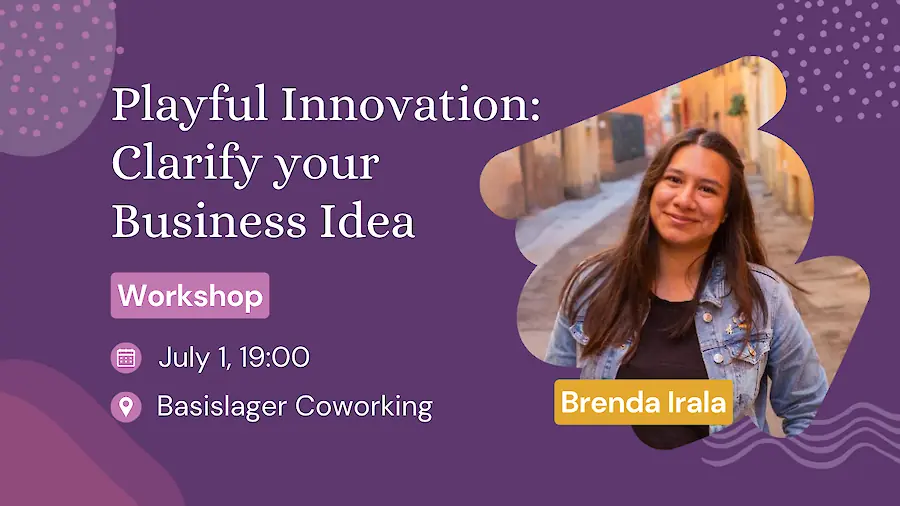
Speaker: Brenda Irala
Connect with Brenda on LinkedIn
Know more about InnGenia here
Introduction
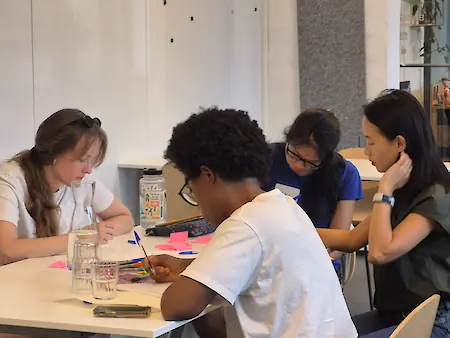
The goal of this workshop wasn't to leave with a "perfect" business idea, but with a framework that you can return to whenever you're developing a new product, service, workshop, project, or business idea.
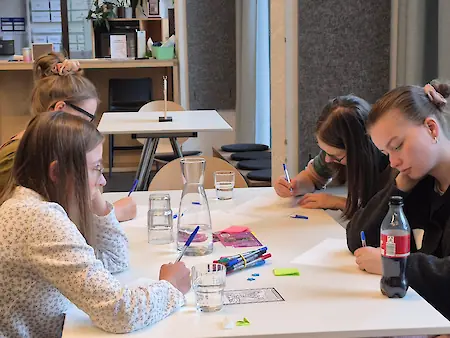
Innovation is rarely a straight line. It is an iterative process of exploring, testing, learning, and refining. The tools we used during the workshop are designed to help you gain clarity whenever you feel stuck and it’s much more productive when you’re playing.
Our brains generate better ideas when we allow ourselves to think divergently before narrowing our focus.
Start with the problem
Before jumping into solutions, spend time understanding the problem.
Ask yourself:
-
What frustrations keep coming up?
-
What feels unnecessarily difficult?
-
What repeatedly annoys people?
-
Which challenges are worth solving?
Then prioritize your ideas by asking:
Problem Focus Questions
-
How much do I understand this problem? (Knowledge)
-
Is this problem within my reach? (Access to context, people, or situation)
Choosing the right problem is often more important than finding the perfect solution.
Understand your audience
A great idea only becomes valuable when it solves a real problem for real people.
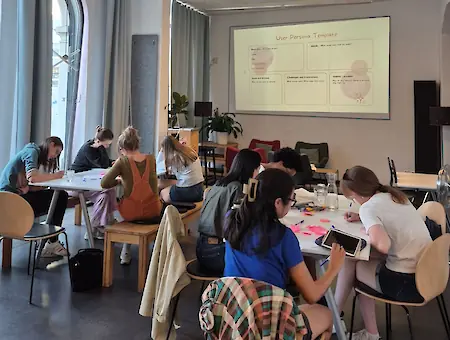
Use a simple buyer persona to explore questions such as:
-
Who is this person? (age, occupation, job, life situation)
-
What are they trying to achieve? (goals, motivations)
-
What challenges are they facing?
-
What are their struggles, frustrations, and needs?
Remember: your buyer persona is a living document. As you talk to more people and learn more about your audience, come back and update it.
Generate and refine ideas for potential solutions
Once you've chosen a problem and identified your audience, it's time to explore possible solutions.
We used creative exercises to generate different perspectives and challenge our assumptions before selecting the ideas with the greatest potential. Don't aim for the first idea—aim for many ideas, then refine them.
To evaluate ideas use the following questions:
Idea Focus Matrix
-
Knowledge: How much do I understand this idea and the problem behind it?
-
Feasibility: Do I have the resources to make this happen? (time, skills, contacts, tools, support)
Be concrete about what you're building
One of the biggest challenges entrepreneurs face is explaining their offer clearly.
Ask yourself: What am I actually creating?
Is it a workshop?
A coaching program?
A community?
A service?
A digital product?
A membership?
Giving your idea a clear name makes it much easier to communicate its value.
Prototype early
Your first version doesn't have to be perfect.
Sketch it.
Draw it.
Write it down.
Create a simple prototype.
The goal is to make your idea visible so you can start learning from it.
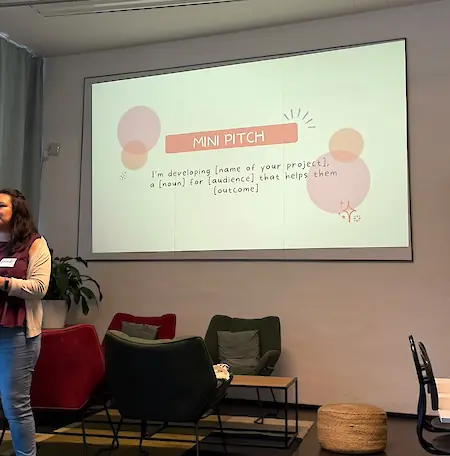
Mini Pitch
To bring everything together, participants used a simple structure to articulate their idea:
I am developing [project name],
a [noun],
for [target audience],
that helps them [desired outcome].
Final Reflection
One idea we discussed throughout the workshop was:
Marry the problem, not the solution.
Your solution will probably change—and that's a good thing.
The more quickly you test your ideas and gather feedback, the faster you'll learn what works and what doesn't.
Innovation isn't about getting it perfect the first time. It's about experimenting, learning, adapting, and improving.
These tools are not a one-time exercise, but an ongoing process that you can revisit whenever you feel stuck—continuously refining and updating your ideas as they evolve and as you gain new insights, to bring greater clarity, direction, and focus to your work.