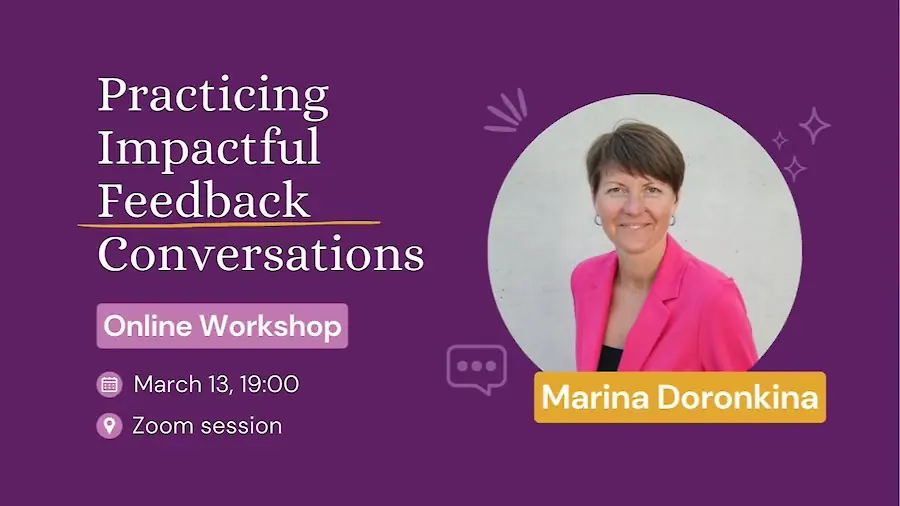
Speaker: Marina Doronkina | Connect with Marina on LinkedIn
🔹 What is Feedback?
Feedback is helpful information and criticism given to someone to help them improve their performance, behavior, or understanding (Britannica). It plays a crucial role in personal and professional growth when given and received effectively.
🔹 Key Principles of Giving & Receiving Feedback
-
Timeliness Matters: Feedback should be given as soon as possible rather than delayed for later.
-
Own Your Feelings: Use “I feel” statements instead of “You make me feel” to take responsibility for your emotions.
-
We Can’t Control Others' Feelings: However, feedback should be genuine and come from the heart to encourage positive communication.
-
Focus on Behavior, Not Personality: Feedback should be actionable and address behaviors rather than character traits.
-
Praise Effort, Not Just Outcomes: Recognizing effort fosters a growth mindset and encourages improvement.
🔹 The Four Types of Feedback
-
Constructive Feedback: Actionable, specific, and helps the recipient improve in a clear way.
-
Negative Feedback: Highlights areas of improvement but may lack clear suggestions on how to improve.
-
Positive Feedback: Recognizes and reinforces strengths and good performance.
-
Feedforward (Positive & Negative): Instead of evaluating past actions, feedforward focuses on future improvements and actionable advice.
🔹 How to Give Effective Feedback
· Be specific: State facts and observed behaviors rather than making broad judgments.
· Use "I" statements: Express how the behavior affects you instead of making assumptions about the other person.
· Avoid judgments: Stay neutral and focus on what can be changed.
· Align feedback with goals: Ensure that feedback is directed toward growth and improvement.
5. The 4-Step Feedback Framework (from Nonviolent Communication, NVC)
1. Observation (Not Judgment): Describe the observed behavior factually, without assumptions.
2. Feelings: Express what you feel when you observe this behavior.
3. Needs: Clearly state what needs of yours are connected to the feelings you identified.
4. Requests: Make a specific request for change or improvement.
Example:
"I noticed that the report was submitted after the deadline (observation). I felt stressed because I needed it earlier to complete my part of the project (feeling). I need timely submissions to stay on track (need). In the future, could we agree on an earlier deadline to avoid delays? (request)."
📚 Resources & Further Reading
For those who want to dive deeper into effective communication and leadership, here are two highly recommended books:
📖 Nonviolent Communication: A Language of Life – Marshall B. Rosenberg (2015)
A powerful guide to compassionate and effective communication, introducing the 4-step NVC process used in this workshop.
📖 Dare to Lead: Brave Work. Tough Conversations. Whole Hearts. – Brené Brown (2018)
A transformative book on courageous leadership, vulnerability, and fostering meaningful conversations in the workplace.
🔹 Wrap-Up & Takeaways
Giving and receiving feedback is an essential skill that requires practice, empathy, and clear communication. When done effectively, it strengthens relationships, enhances collaboration, and fosters growth. The key is to keep feedback timely, specific, and focused on behaviors rather than personal traits.