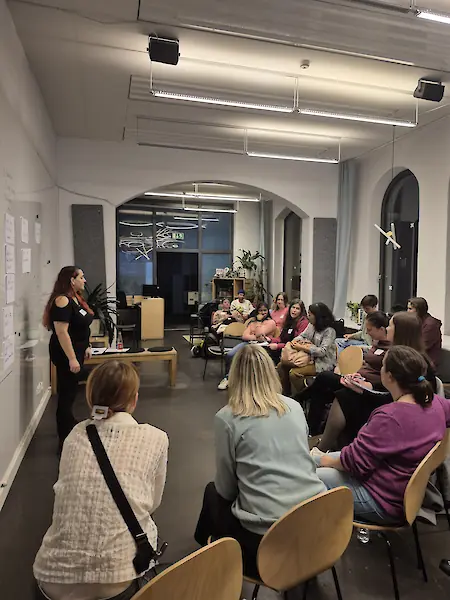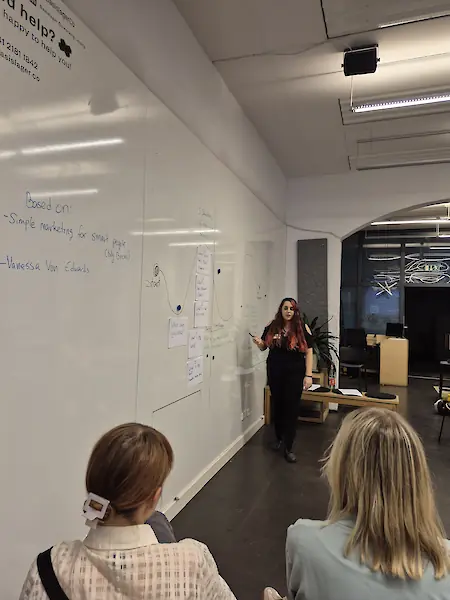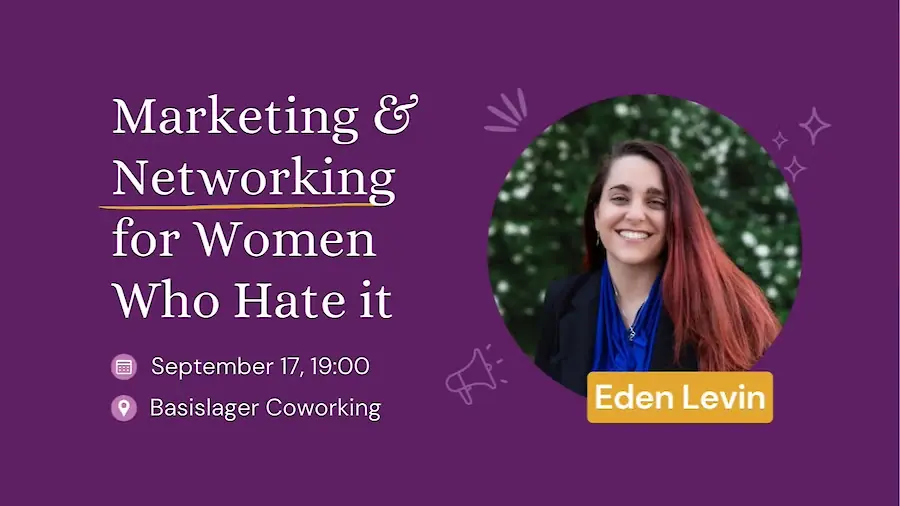
Speaker: Eden Levin | Connect with Marina on LinkedIn
Marketing and networking often feel “salesy,” overwhelming, or simply exhausting—especially for introverts or those who don’t feel it comes naturally. But marketing and networking don’t have to feel fake. With the right mindset and tools, they can become authentic, energizing, and effective ways to connect and grow.
This workshop explored how to rethink marketing and networking through research-based strategies, practical tools, and interactive exercises.
Inspired by Simple Marketing for Smart People by Billy Broas & The Science of People by Vanessa Van Edwards
Key Takeaways
1. Spark Curiosity & Educate
-
The first step in marketing is not selling—it’s sparking curiosity and offering value.
-
Education builds trust and opens the door to authentic conversations.
2. Belief Identification
Understand the current beliefs your audience holds about your field, your product, or themselves. Examples:
-
“Creativity is just for artsy people.”
-
“Networking is just about collecting contacts.”
💡 Tip: If you don’t know: ask them directly! Research their assumptions. This helps you position your solution.
3. Belief Building
Marketing is ultimately about belief change. If someone doesn’t yet believe what you’re saying, they won’t act. That’s why we must build bridges between their current beliefs and new perspectives.
Awareness
-
What do they need to understand about the problem?
-
Why now? Create urgency by asking: What happens if this problem isn’t solved?
-
Builds empathy by showing you understand their struggles.
Consideration
-
What are the existing options?
-
What do they need to believe about my solution?
-
Address the risk of inactivity (what they lose if they do nothing).
Decision
-
Why me? Why should they trust you?
-
Why this product/service? What do they need to believe about it?
-
What happens after purchase? Show the transformation or outcome they can expect.
The 5 Q’s of Marketing (Billy Broas’ Framework)
-
Where are they now?
Understand your prospects’ current situation, struggles, and mindset. -
What’s their problem?
Identify their beliefs and challenges about your field or industry. -
Examples:
-
Innovation is too difficult.
-
Your service is too expensive
-
Networking is fake and only for extroverts.
-
What is the new way?
Offer a fresh perspective that reframes their challenge. -
What’s my way?
Share your unique approach, process, or method. -
What’s my proof?
Back up your claims with: -
Character: Reference someone well-known (celebrity, authority, relatable role model).
-
Facts: Use data, research, or statistics to support your points.
-
Stories: Share relatable experiences or case studies to connect emotionally.
Networking Insights (Vanessa Van Edwards’ research & Eden’s tips)
-
Connection over collection: Networking isn’t about gathering information—it’s about building meaningful relationships.
-
Make it emotional: Ask questions that spark excitement, e.g. What is exciting about the project you’re working on?
-
Break regularity: Ask unusual, memorable questions.
-
Wingperson power: Come with a friend who can introduce you to others.
-
Conversation threads: Listen for “connecting words” to open new topics and keep conversations flowing.
-
Closing gracefully: End a conversation with kindness: “I don’t want to take too much of your time. How can I connect with you later?”
Final Thought
Marketing and networking don’t have to feel like a nightmare. With a mindset shift, simple frameworks, and practice, they can become natural tools to grow your business and community—without losing yourself in the process.