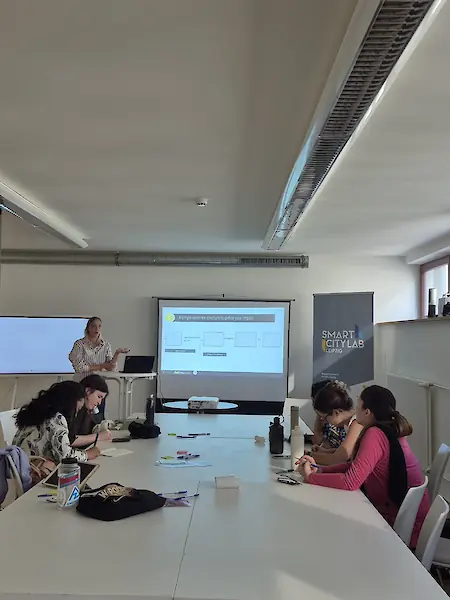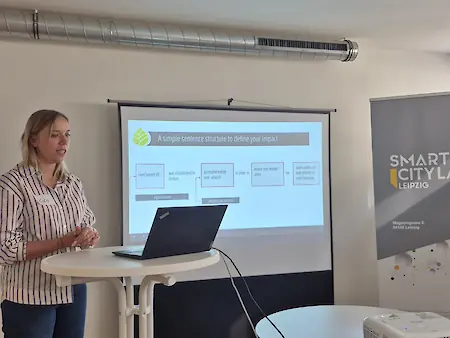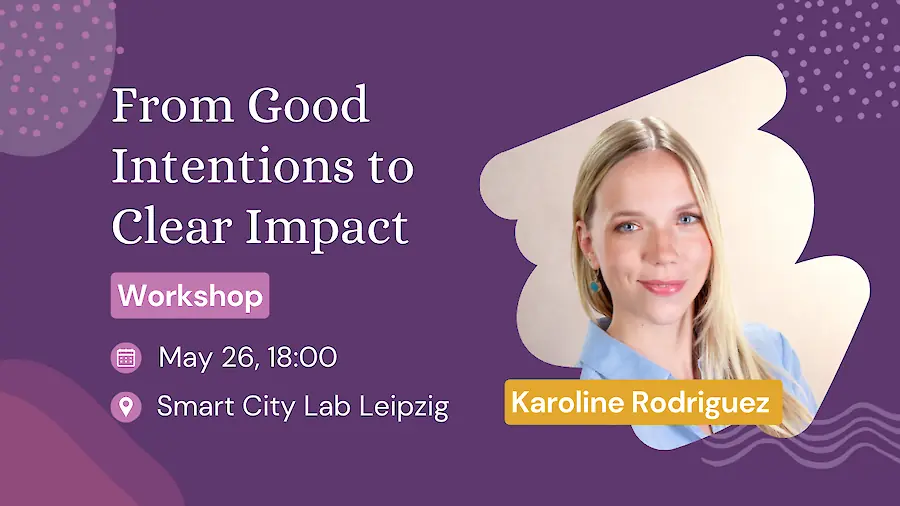
Speaker: Karoline Rodriguez Rivera (Roots of Impact) | Connect with Karo on LinkedIn
Know more about Roots of Impact on their website
Register for the bootcamp here
Introduction
Many entrepreneurs, creatives, and organizations aim to create positive change through their work. Whether it is empowering people, improving confidence, supporting communities, or contributing to sustainability, impact is often already part of what we do.
But an important question remains: How do we know if we are actually creating that impact?
This workshop introduced the basics of IMM (Impact Measurement & Management), a framework focused on collecting and using data not only for reporting purposes, but also to improve decision-making and better understand the change we are creating.
The IMM cycle follows an iterative process:
Do → Measure → Learn → Improve
Why Does Impact Measurement Matter?
Measuring impact can help:
-
Access funding opportunities
-
Maintain strategic focus
-
Avoid drifting away from the mission
-
Increase trust and credibility
-
Strengthen reputation
-
Motivate employees and stakeholders
-
Improve decision-making
-
Create impact reports
A key insight from the session: Impact measurement is not just about proving impact — it is also about improving it.
Outputs vs Outcomes
An important distinction discussed during the workshop:
Outputs measure activities.
-
Example: “100 women attended our workshops.”
-
Outputs show what was done.
Outcomes measure change.
-
Example: “70% of participants reported increased confidence when applying for jobs within two months after the workshop.”
-
Outcomes help us understand what changed, for whom, and within what timeframe.
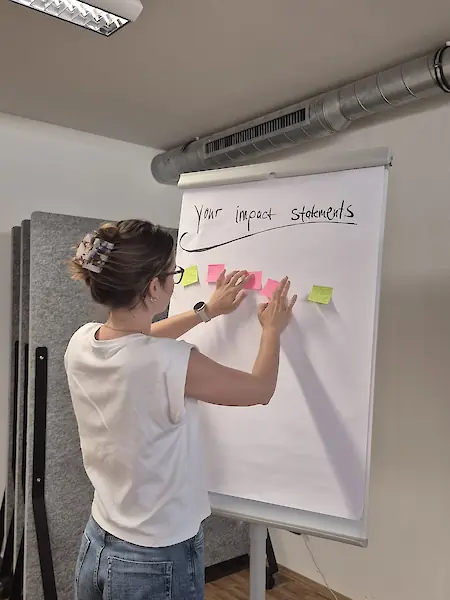
Impact Statements
An impact statement helps define:
-
what your organization does,
-
what change it aims to create,
-
and for whom.
It represents the promise behind the work.
Basic Structure of an Impact Statement
[Business/Organization Name]
delivers [product/service]
in order to [desired change or impact]
for [target audience/stakeholders]
When creating an impact statement, consider:
-
What change are we trying to create?
-
Whose lives or experiences are changing?
-
What does success look like?
-
Who are the stakeholders?
-
How will we know if the change actually happened?
Impact statements should also be reviewed regularly and adjusted over time.
KPIs – Measuring the Change
KPIs (Key Performance Indicators) help translate impact into measurable signals.
They help answer the question: Are we actually achieving the change we want to create?
KPIs should focus on people, behavior, experiences, and measurable change.
Example KPIs
-
50% of participants entered employment within six months after completing the training.
-
70% of clients reported improved confidence.
-
65% of women reported forming at least one professional collaboration within a year.
-
80% of participants reported decreased stress levels after eight sessions.
A strong KPI usually includes:
-
the target audience,
-
the expected change,
-
and a timeframe.
SMART KPIs
KPIs should be:
-
Specific
-
Measurable
-
Achievable
-
Relevant (aligned with the mission)
-
Time-bound
Gathering Information & Feedback
The workshop also explored ways to collect meaningful feedback and measure impact over time.
Suggestions included:
-
keeping KPIs consistent over time to compare results,
-
motivating people to answer surveys,
-
offering incentives (discounts, follow-up resources, etc.),
-
and designing systems that make data collection easier.
Open Questions
Useful for gathering qualitative insights.
Examples:
-
“How did you experience the workshop?”
-
“What was most valuable for you?”
Closed Questions
Useful for measurable data.
Example:
-
“On a scale from 1–5, how supported did you feel during the program?”
A follow-up question can also help:
“Why did you choose that score?”
Example KPIs for Community Building
The workshop also explored how impact measurement can apply to communities and events.
Examples:
-
60% of community members report forming at least one professional collaboration within a year.
-
70% of community members consider the community a safe space to share challenges.
Possible survey question:
“Within the last year, did you form at least one meaningful professional connection through the community?”
Wrap-Up & Key Takeaways
The workshop highlighted that impact measurement is not only for large organizations or social enterprises.
It can also help freelancers, entrepreneurs, creatives, and community builders:
-
better understand their work,
-
stay aligned with their mission,
-
make informed decisions,
-
and create more intentional change.
Key reflections:
-
Outputs are not the same as outcomes.
-
Impact needs to be connected to measurable change.
-
KPIs should reflect the mission and desired transformation.
-
Feedback and measurement help improve future actions.
-
Measuring impact can strengthen both strategy and credibility.
For those interested in learning more, Roots of Impact also offers bootcamps and further learning opportunities around impact measurement and management.Register here